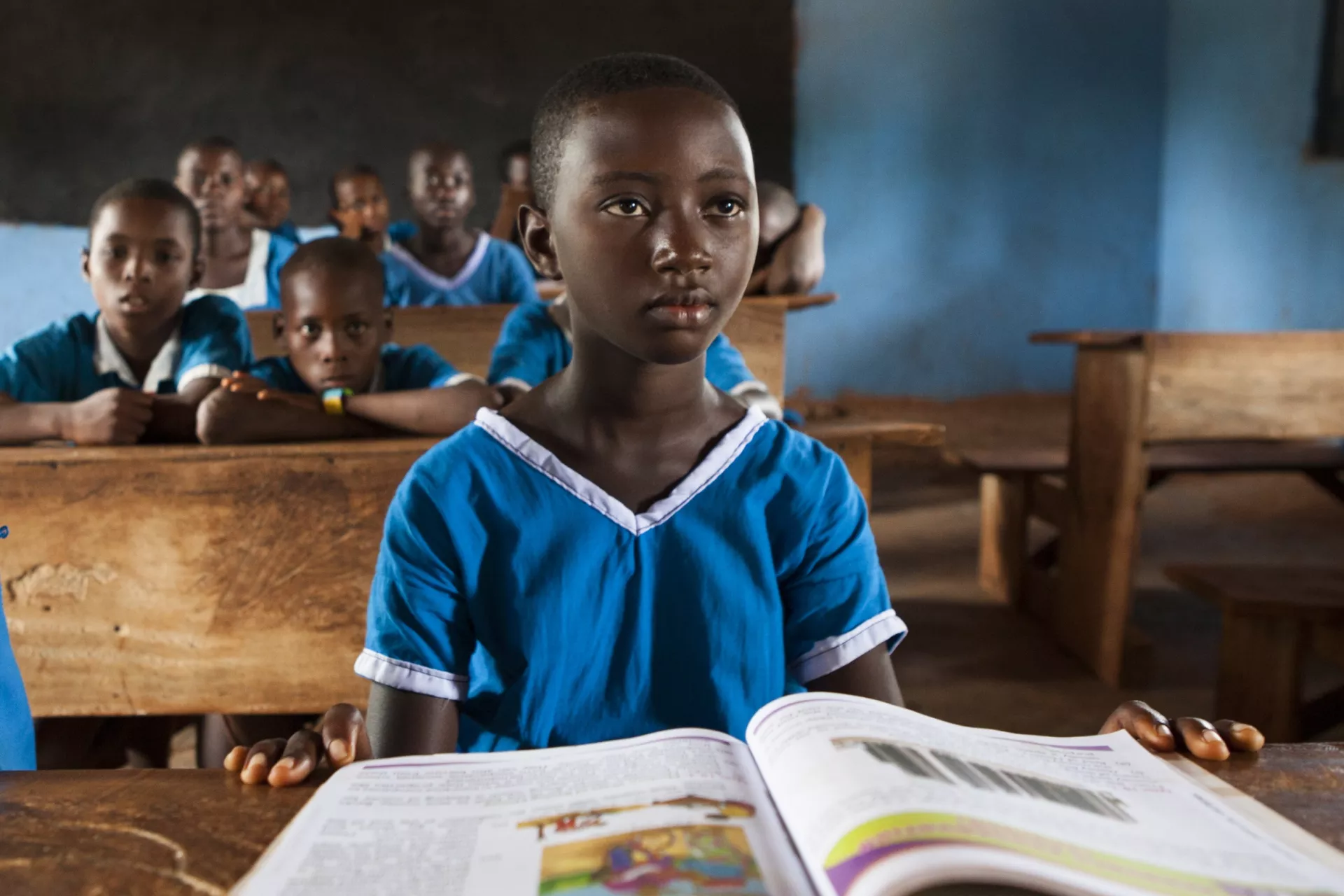
Education has always been important to me and it is a crucial part in contributing to the foundation of society. As a student, I’ve personally experienced how access to education can open doors, build confidence and create opportunities that may not have existed otherwise. Because of that, volunteering with the United Nations Volunteers (UNV) and Girls Education Mission International (GEM) has been an incredibly meaningful experience for me. It has given me the opportunity to contribute to a mission that makes changes both inside and outside the classroom. GEM’s mission focuses on empowering girls and strengthening communities through education. When I first began volunteering with Girls Education Mission International through the United Nations Volunteers program, I hoped to gain experience while contributing to a cause I cared about. What I didn’t expect was how much the experience would shape my own perspective on education, advocacy and the power of collective action.
Girls Education Mission International approaches education with the understanding that lasting change begins by investing in people. Rather than viewing education as simply attending school, GEM recognizes that access to learning creates opportunities that can influence every aspect of a girl’s future. Through advocacy, community engagement, partnerships and fundraising initiatives, the organization works to remove barriers that prevent girls from receiving the education they deserve. Their mission reflects the belief that every girl, regardless of where she is born or the circumstances she faces, should have the opportunity to learn, develop her talents and reach her full potential. GEM’s mission also extends beyond providing immediate assistance. This organization emphasizes creating sustainable, long-term impact by empowering girls through education and encouraging communities to recognize the value and importance of investing in future generations. Campaigns such as GEM’s #Give15Gain15 demonstrate how collective action can make a meaningful difference. While an individual contribution may seem small, GEM reminds us that lasting change is often built through many people choosing to contribute in whatever way they can, whether that’s through donations, volunteering, advocacy or simply sharing the mission with others.
Something I appreciate about nonprofit organizations like GEM is that they remind us that meaningful change is often collaborative. Governments, educators, nonprofit organizations, donors, volunteers and local communities all have important roles to play. Progress rarely comes from one individual working alone. Instead, it comes from many people contributing their unique skills toward a shared common goal. Since I am a volunteer, my role may look different from someone working directly in a program or educational development because most of my work involves communication and advocacy. At first glance, writing social media posts or sharing campaigns might seem like a small contribution compared to work happening on the ground. However, effective communication is essential for nonprofit organizations. Without this kind of awareness, it can become much more difficult to build partnerships, recruit volunteers and expand the reach of important initiatives.
When we think about education, it’s easy to think of classrooms, textbooks, and exams. While those things are definitely important, education includes much more than that. It’s the foundation that individuals build their futures upon. It provides knowledge, encourages critical thinking and teaches people how to use their confidence to pursue their goals. However, for millions of girls around the world, access to education is still not guaranteed. That reality can be difficult to comprehend. Many of us grow up assuming school is simply a normal part of childhood. Some may complain about homework or early mornings, but we rarely have to question whether we’ll be allowed to attend school at all. Unfortunately, that is not the case everywhere. Around the world, millions of girls continue to face barriers that prevent them from accessing education. These barriers can include challenges such as poverty, geopolitical conflict, discrimination, cultural expectations, lack of school supplies or limited infrastructure. These barriers have nothing to do with a girl’s intelligence or potential, they are obstacles created by circumstance rather than ability. Every girl has the capacity to learn, dream and contribute to her community when she’s given the opportunity. Access to education can help unlock that potential.
This is one of the reasons I was drawn to GEM’s mission. This organization is committed to creating, increasing and improving educational opportunities for girls while also recognizing that education can create ripple effects that also impact those around them. When one girl receives an education, the impact can extend to her family, her community and future generations. Educated girls are more likely to become leaders, participate in their local economies and help create positive social change. As I have become more involved with GEM, I have also gained a greater appreciation for the amount of work that happens behind the scenes. Successful nonprofit organizations rely on collaboration between volunteers, donors, educators, community partners and supporters around the world. Every social media campaign, fundraising initiative, educational resource and outreach effort represents countless hours of planning and teamwork. Learning more about these efforts has helped me recognize that creating meaningful impact requires not only passion for a cause, but also effective communication, organization and collaboration.
One aspect of GEM’s work that resonates with me is the understanding that lasting change often begins with simple and consistent acts of support. Sometimes it’s easy to think that solving global challenges requires massive interventions beyond the capability of ordinary people and their limited accessibility to certain resources. While large-scale policy and international cooperation are important and necessary, meaningful progress also happens because individuals choose to care and take action. That is the idea behind initiatives like Give15:Gain15. This campaign demonstrates how relatively small contributions, when multiplied across many people can create meaningful opportunities for girls who otherwise may not have access to education. It reminds us that lasting impact is often cumulative. A single contribution may seem small on its own, but collective action has the power to transform lives. When we hear about the numbers of girls who are unable to attend school, it is easy to lose sight of the individual stories behind each of them. Each statistic represents a young person with talents, ambitions and dreams that deserve the opportunity to grow. Every girl who gains access to education gains more than academic knowledge; she also gains choices, confidence and the ability and resources to shape her own future.
As someone studying political science with interests in global studies, I often find myself thinking about these kinds of global challenges from a policy perspective. Government decisions, international organizations, nonprofit partnerships and community engagement all play important roles in creating sustainable development. Volunteering with organizations such as Girls Education Mission International has reminded me that reports and statistics represent real people with real aspirations.
Education is one of the most effective long-term investments that societies can make. It can contribute to healthier communities, stronger economies and greater civic participation. Educated individuals are often better equipped to solve problems, support their families and contribute positively to their communities. While education alone cannot solve every global challenge, it can provide an essential foundation for other forms of progress to be built upon. Education can also help break cycles of poverty by creating opportunities that extend beyond one generation. Mothers who have received an education are often better educated on knowing how to support their own children’s learning, which creates a cycle where future generations are also more likely to attend school and succeed academically. These patterns demonstrate that investing in one girl’s education can influence countless lives over time. Education also strengthens communities by encouraging innovation and diverse perspectives. Every society benefits when individuals are given the opportunity to develop their abilities, regardless of gender. Girls bring unique experiences, ideas and leadership styles that deserve to be represented in classrooms, workplaces and decision-making spaces. When educational opportunities become more inclusive, communities become stronger because they are able to draw upon the potential of all their members rather than only a portion of them.
Volunteering has also reinforced something I have been learning throughout my education: global challenges require collaboration. Organizations like GEM demonstrate that people from different countries and backgrounds can come together to work toward shared humanitarian goals. Whether someone contributes through volunteer service, advocacy or simply sharing information with others, every effort becomes collaborative, cumulative and part of a larger movement. Another lesson I’ve learned is that meaningful change rarely happens overnight. Addressing educational inequality requires persistence, collaboration, and long-term commitment. Progress often occurs one student, one classroom, and one community at a time. While such a pace can sometimes feel slow, it also demonstrates the importance of patience and consistency. Lasting change and impact is built through sustained effort rather than isolated moments.
It is also encouraging to see how technology has expanded opportunities for advocacy. Social media, professional networking and digital campaigns allow organizations to reach audiences around the world in ways that were unthinkable only a generation ago. Volunteers can help amplify important messages, educate their own communities, and inspire others to become regularly involved regardless of geographic location. Digital engagement cannot replace direct program work, but it can serve as an important bridge connecting supporters with meaningful causes across the globe. Effective advocacy requires listening, learning and communicating in ways that encourage understanding rather than division. Throughout my experience with GEM, I have gained a great appreciation for the work that goes into creating thoughtful campaigns, collaborating with volunteers from different backgrounds, and ensuring that important messages are communicated respectfully and accurately. These are skills that extend far beyond nonprofit work and are valuable in nearly every professional setting.
Volunteering has also challenged me to think more globally while remaining mindful of local realities. Every community experiences different educational challenges, which means there is rarely a single solution that works everywhere. Instead, meaningful progress depends on understanding the needs of individual communities and working alongside local partners who know those communities best. That perspective has helped me better understand why collaboration, cultural awareness, and long-term partnerships are essential components of sustainable development.
Girls’ education is about so much more than classrooms. It is about opportunity, equality, and hope. It is about ensuring that every child has the chance to discover her talents, pursue her ambitions, and contribute to her community without being limited by circumstances that are outside of her control. While the challenges are significant, so is the potential for positive change. Every conversation, every volunteer, every partnership, and every act of generosity contributes to a larger movement working toward a future where every girl has the opportunity to learn.
I have gained a much deeper understanding of how interconnected our world truly is. A challenge affecting girls in one part of the world may seem distant at first, yet education, opportunity, and human potential are universal values that connect us all. Every conversation that raises awareness, every volunteer who gives their time, and every person who chooses to support organizations like GEM contributes to something much larger than themselves. This experience has also reinforced why I chose to study political science and global studies. I’ve always been interested in understanding how governments, organizations, and communities work together to address global challenges. Volunteering with GEM has allowed me to see those ideas in practice through advocacy, collaboration, and community engagement. It has reminded me that meaningful change is not only created through policy but also through ordinary people who dedicate their time and talent to causes they believe in.
As I continue volunteering with GEM, I hope to keep learning more about global education, nonprofit communications, and international development. Every experience inspires new perspectives and reinforces my appreciation for organizations working to create educational opportunities for girls around the world. I’m so grateful for the opportunity to support that mission through Girls Education Mission International. This experience has strengthened my appreciation for the transformative power of education and reminded me that meaningful progress often begins with ordinary people choosing to care. When we invest in girls’ education, we invest in stronger families, more resilient communities, and a better future for everyone. That is a mission worth supporting and one that I am proud to be a small part of.
Tags: #Education #Girls #Volunteer
Categories:
Uncategorized